A listing on browsergames.top means one thing: a person visited the game’s public pages and found a game that runs in a normal browser, keeps a shared world going while you are away, and has other real players in it. We also look for dated evidence that someone is still running it, and we write down what we found. A listing is not a review score and it cannot be bought. This is the full checklist, for players who want to know what a listing is worth and for builders who want to know what gets a game in.
The three tests every game must pass
Our about page sets three tests. A game has to pass all of them.
It runs in a normal browser. No installer, no launcher, no plugin. Companion phone apps are fine, and so is a Steam edition, as long as the browser version is the real game. This test removes more old games than any other. Several well-known titles from the Flash era now offer only a downloadable client, and a “play in your browser” line left on an old homepage does not change that.
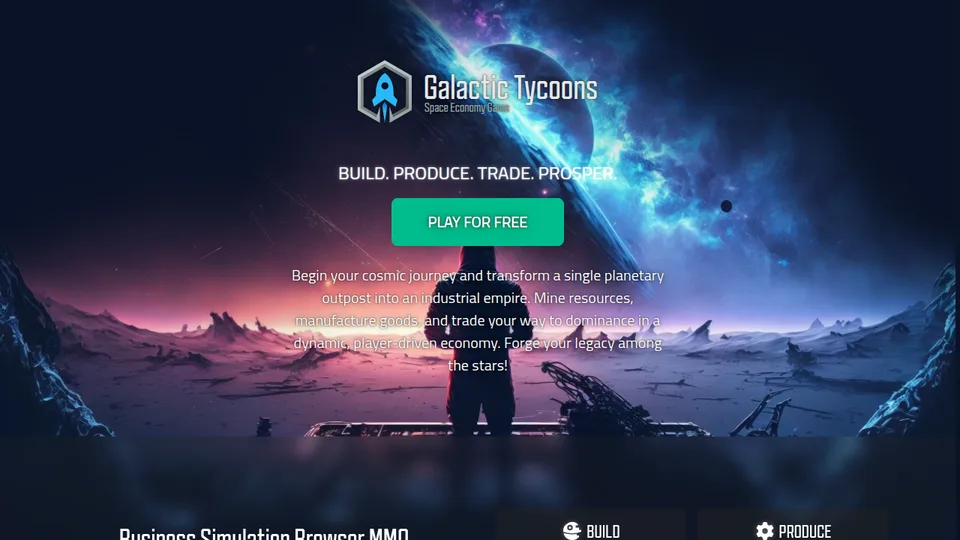
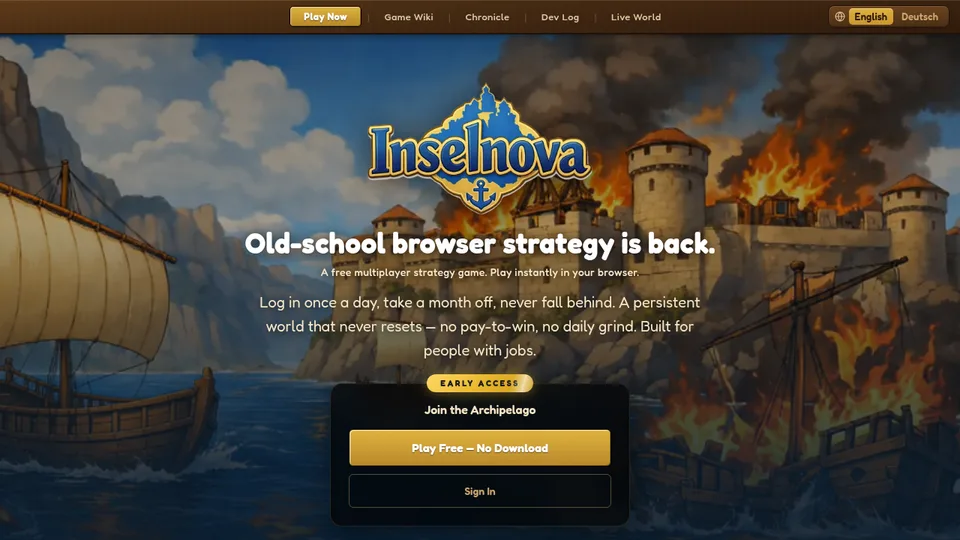
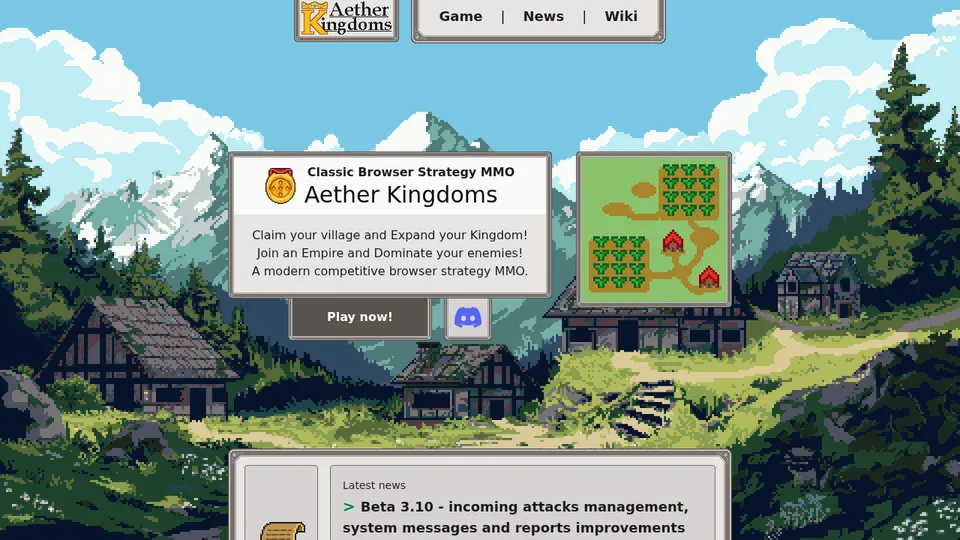
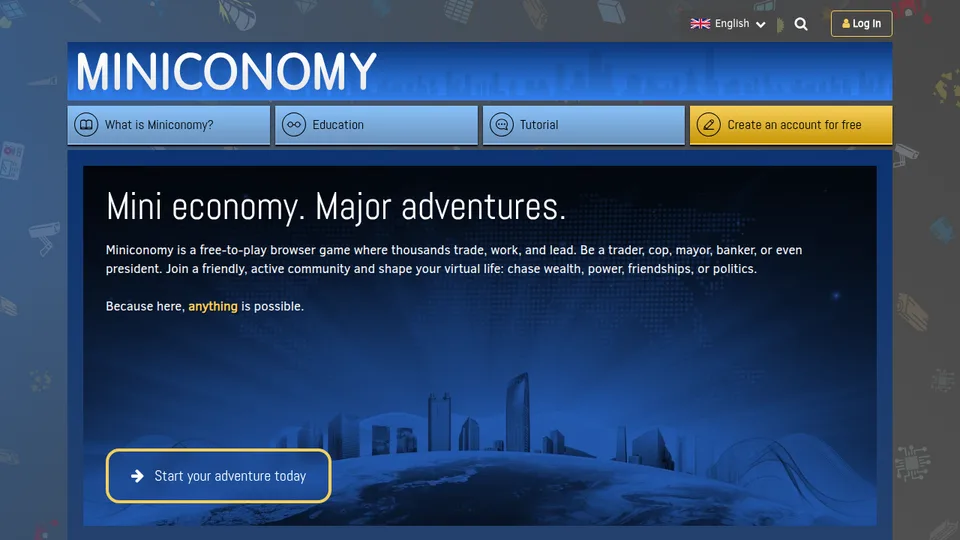
The world persists. The world has to keep existing and changing while you are logged out. Rounds and seasons are fine if a world runs for weeks between resets. Galactic Tycoons says in its FAQ that its galaxy “is persistent and will not be reset or shut down”. Inselnova says its world never resets. Aether Kingdoms runs servers for four to six months, and Miniconomy gives each player a three-week trading period. All four pass. A game built from separate matches does not, even when it keeps a ladder between them. Each match is a small world that ends when the match does.
Other people share it. Real players have to meet through a market, a map, a league, a forum or a fight. A single-player idle game with a high-score table bolted on does not pass. We have turned down games that describe themselves, honestly, as single-player with a leaderboard.
What we do not list, even when the three tests pass
The submit page lists the exclusions. These are the ones builders ask about most.
Crypto, NFT and play-to-earn economies. If a token, an NFT or a wallet balance inside the game has real-money value, we do not list it. That holds when the token is described as optional. A simulated stock or coin market that trades only in game currency is a different thing, and is fine.
Cash prizes. A round that pays its winner real money is out, however small the prize. One game we reviewed paid its round winners a few US dollars, and that was enough to decline it. Prizes paid in game currency are fine.
Fan games, unless they say so plainly and do not sell access to someone else’s work. A fan project has to tell players what it is, on its own pages. It also must not charge for a world, characters or names that belong to another company. We have declined fan games that sold premium packs on another studio’s maps and classes with no licence stated.
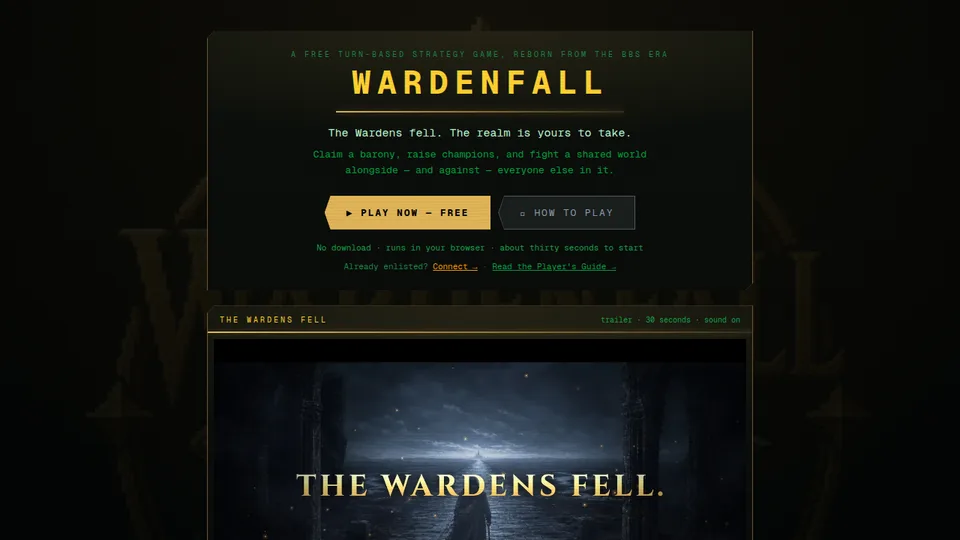
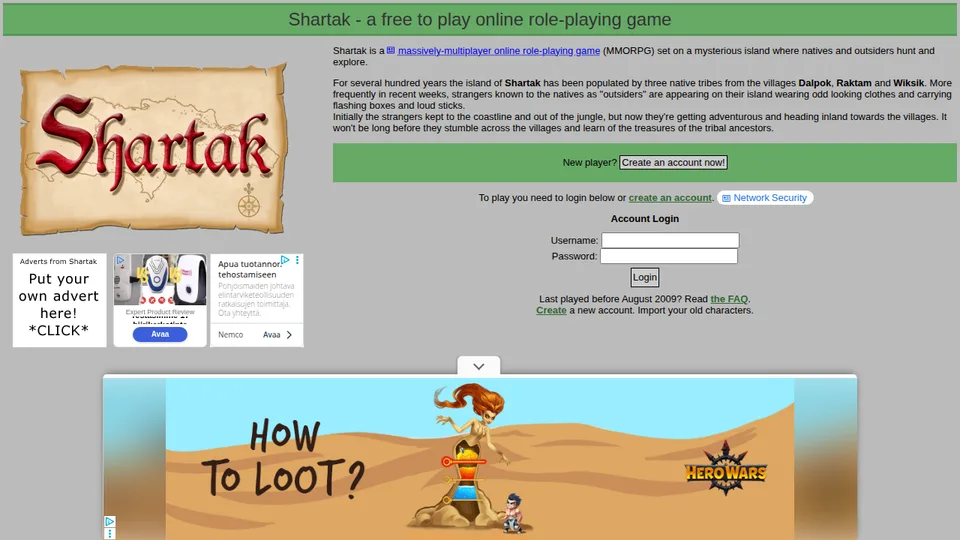
Games inspired by an older title are a different case, and they pass when they say so. Wardenfall’s footer reads “Not affiliated with the original Barren Realms Elite or John Dailey Software.” Inselnova’s about page calls it “a modern reimagining” of Inselkampf, a German strategy game that ran from 2005 to 2014. Shartak’s FAQ admits its interface looks like Urban Dead’s and says that game’s creator “has encouraged its development”. Nobody has to guess.
Adult-only games. A game gated to adults, or built around sexual content, is out. A crime theme or a teenage age limit is not the same thing.
The rest: gambling sites, real-money trading, cheat tools, private servers of commercial MMOs, and any game with a credible safety complaint against its community.
Signs of life: how status is decided
Status follows dated evidence: something a person wrote or released, with a date on it. In rough order of weight, that means a changelog or patch note, a news post, a forum post, an app-store “updated on” stamp, or a published round calendar. A live player counter is weaker evidence than any of these, because nobody outside the game can check it. Copyright years count for nothing, since many footers print the current year automatically.
| Status | What it takes |
|---|---|
| Live | A dated sign of life within the last six months |
| Beta | The game calls itself alpha, beta, early access or a playtest |
| Unverified | Nothing dated inside six months, or no dates at all, and no sign it has stopped |
| Dormant | The newest dated sign of life is more than a year old |
| Closed | The game’s own site says it has shut down |
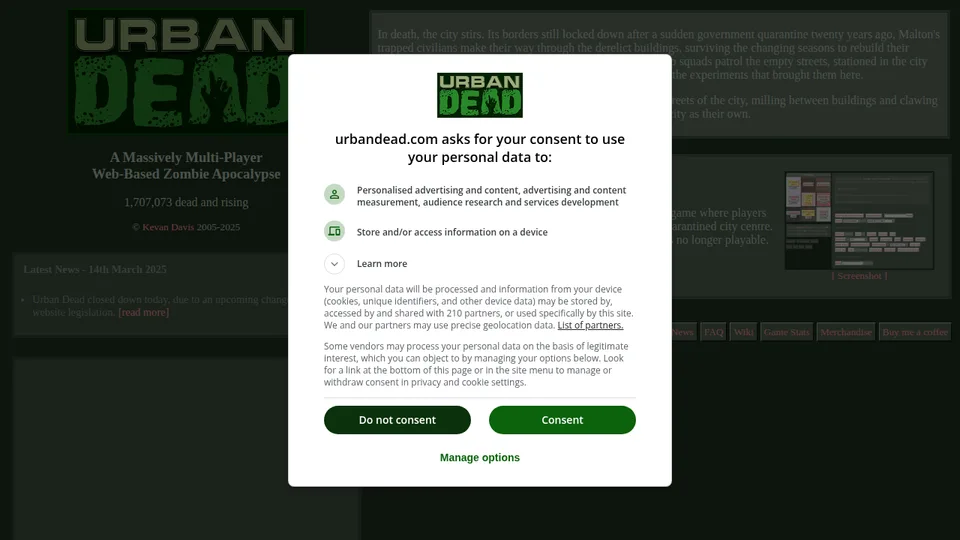
Closed needs the game’s own word. Urban Dead’s homepage carries a news item of 14 March 2025 saying it “closed down today, due to an upcoming change in UK website legislation”. We keep the entry for the record and move it to the end of every list. A site that refuses an automated request has not closed. We check those in a real browser before we call anything dormant.
Every game page shows the date we last checked it and the newest dated activity we found, with a link to where we saw it. Dormant and closed games say so in their fact table. We do not rank games by guesses about how busy they are.
Honest public pages
We read public pages only. We do not create accounts, fill in forms, vote or solve captchas. So everything in a listing has to come from a page anyone can open, and a game’s public site is part of the review.
Two things sink a submission here, and a third changes what we write.
- A homepage that is only a login box. With no about page, rules or news, there is nothing to verify. We have declined games for that alone.
- Legal pages still holding template text. One site’s terms said that ownership, payment and refund terms “should be added here before launch”. Another sold starter packs while its terms promised the operator’s legal details would be added before commercial release. If the terms are a draft, players cannot know who they are dealing with.
- Claims we cannot check. One landing page promised battles “fought by thousands of players” for a game still running on an alpha server. A claim like that does not keep a game out, but it does not go in the listing. We never repeat a player count without saying who published it.
Small is not a problem. A young game with a few dozen players and honest pages gets listed.
What a listing contains
Each listing has a one-line pitch and a short summary, written in our own words after the visit. We never paste a game’s marketing copy or another directory’s description.
Beside that sits a fact table:
- first released, and the date we last checked;
- the last activity we saw, with a link to it;
- developer, pricing, genre, setting and play style;
- how the world resets;
- platforms, languages and community links.
Pricing uses five labels: Free, Free with purchases, Subscription, Paid and Unknown. Free means we saw no charges anywhere.
What we cannot verify stays blank rather than guessed. A game page says “Not stated” for the developer and “Unknown” for the release year when the game’s own pages do not tell us. That happens more than you might expect. About half our listings say “Not stated” for the developer. For about one in six, we could not tell how the game makes money.
Sponsored placements are labelled, use the same card as everything else, and never change a fact, a status, an Editor’s pick or the order of other games.
How to get a game listed
Submitting is free on the submit page. A person reads every submission, visits the game and checks the three tests. Missing fields are fine; we fill the gaps when we visit. You get a reply within seven days: listed, needs something, or not a fit, with the reason.
What makes our job quick is what makes a player’s job quick:
- a public page that says what you do in the game;
- a changelog or news page with dates on it;
- rules or a guide that open without an account;
- a named person or company behind the game;
- a plain statement of what is for sale.
If something on a listing goes out of date, every game page has a report link. Corrections usually go live within a few days, and the check date moves when they do.