A short history of browser-based games starts before the web. The shared worlds people now play in a tab descend from two older ideas: text dungeons on university computers in the late 1970s, and strategy games run by post, where you mailed your orders and waited for the result. The web gave both a cheap home in the late 1990s. Flash and Facebook made browser games a mass market around 2009. Phones pulled players and money towards apps in the 2010s. The 2020s brought idle MMOs and a wave of solo developers building with AI tools. This post traces that line, era by era, and links the games from each era that are still running.
Before the browser: MUDs and postal empires
The first MUD, short for Multi-User Dungeon, was written at the University of Essex. Roy Trubshaw started it in 1978 on a DEC PDP-10 and handed it to fellow student Richard Bartle in 1980, per Wikipedia’s MUD history; its MUD1 article dates the start to 1977. When Essex connected its network to ARPANET in 1980, MUD became the first multiplayer role-playing game on the internet. You typed commands, and other people’s characters stood in the same rooms.
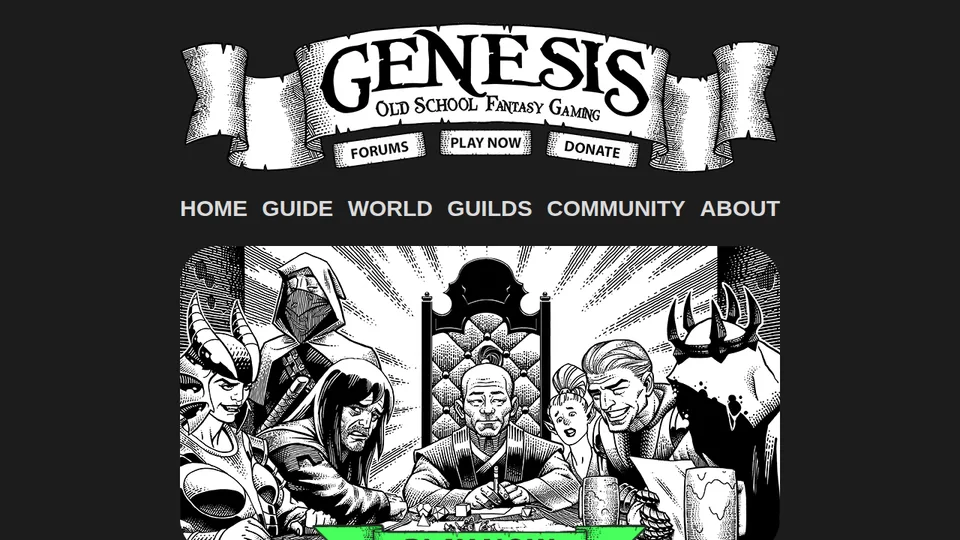
MUDs spread through university networks for the next decade. Genesis, the original LPMud, was founded in 1989 by a group from Chalmers in Gothenburg, and its history page records a 2013 client that lets you play it in any browser. Aardwolf (1996) and Achaea (1997) are also still running with browser clients. The MUD genre page lists the rest.
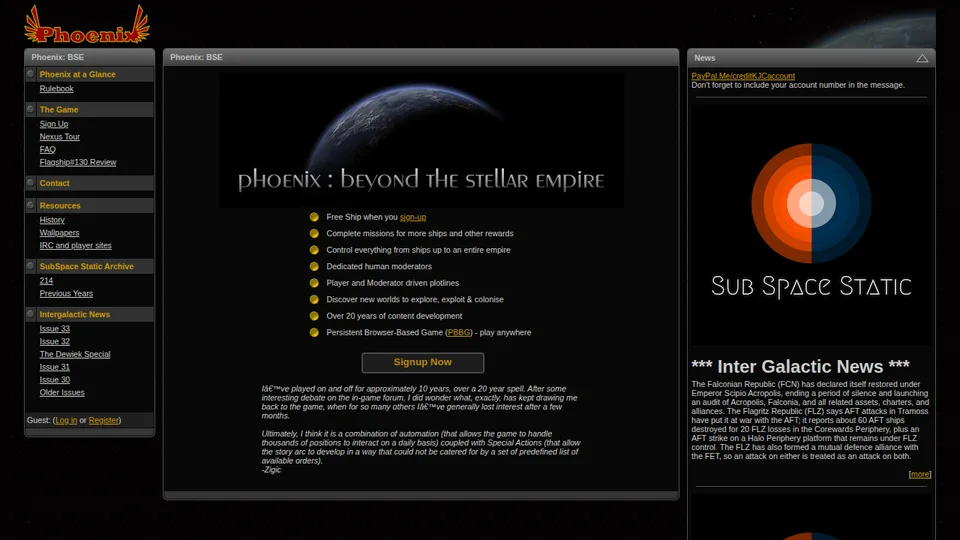
The other ancestor came by post. Flying Buffalo launched Nuclear Destruction, the first commercial play-by-mail game, in 1970 (Wikipedia). Players mailed orders, a moderator processed the turn, and results came back by post. Two weeks was the most common turnaround in 1987, and $3 to $5 per turn the most common price in 1986. Some games never ended. Beyond the Stellar Empire opened in 1982; KJC Games licensed it for the UK in 1992 (SF Encyclopedia), and its successor Phoenix: BSE still takes orders through a browser and returns results by email. When the internet arrived, it “knocked most PBM publishers out of business”, as Shannon Appelcline wrote in 2014.
Dial-up bulletin boards bridged the two. Trade Wars appeared on the Nochange BBS in 1984 (Wikipedia), and “door games” such as TradeWars 2002, Solar Realms Elite and Barren Realms Elite followed. InterBBS leagues let players on different boards compete in one game (Wikipedia). The format is still being rebuilt: Wardenfall, a barony game with fifteen turns a day, says in its footer that it is “Inspired by the classic 1990s BBS door games.”
The first web games, 1995 to 2005
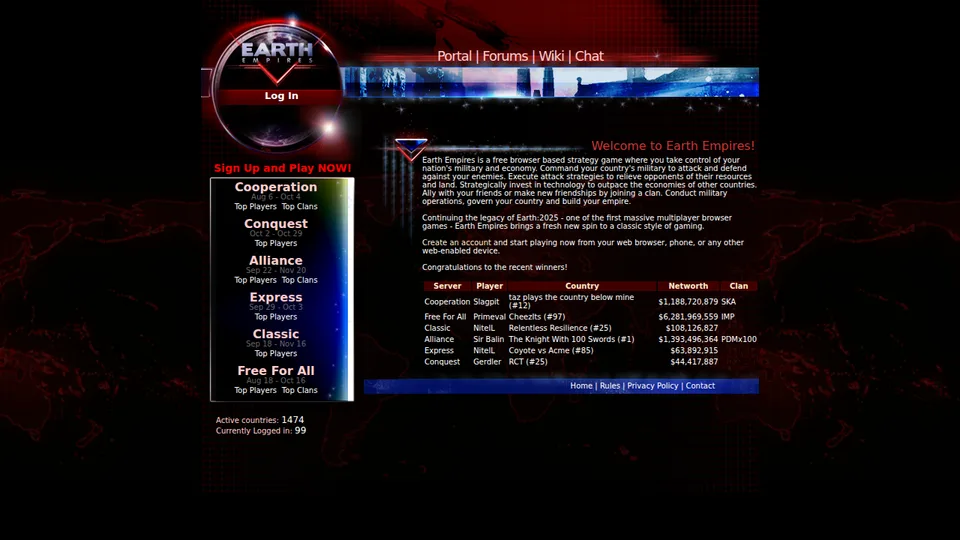
Wikipedia’s browser game article names Earth:2025, released in 1995, as one of the first: text only, but players could form alliances. Earth Empires still describes itself as “Continuing the legacy of Earth:2025”. After that the dates come quickly:
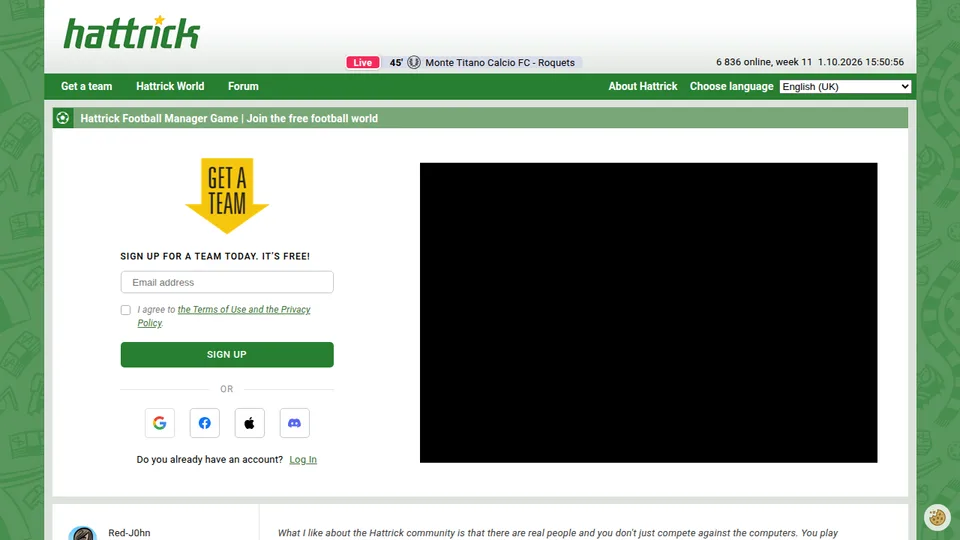
- Hattrick, a Swedish football manager, launched on 30 August 1997.
- Utopia, a kingdom war game by Mehul Patel, launched on 11 October 1998 and peaked at around 100,000 active users in the early 2000s.
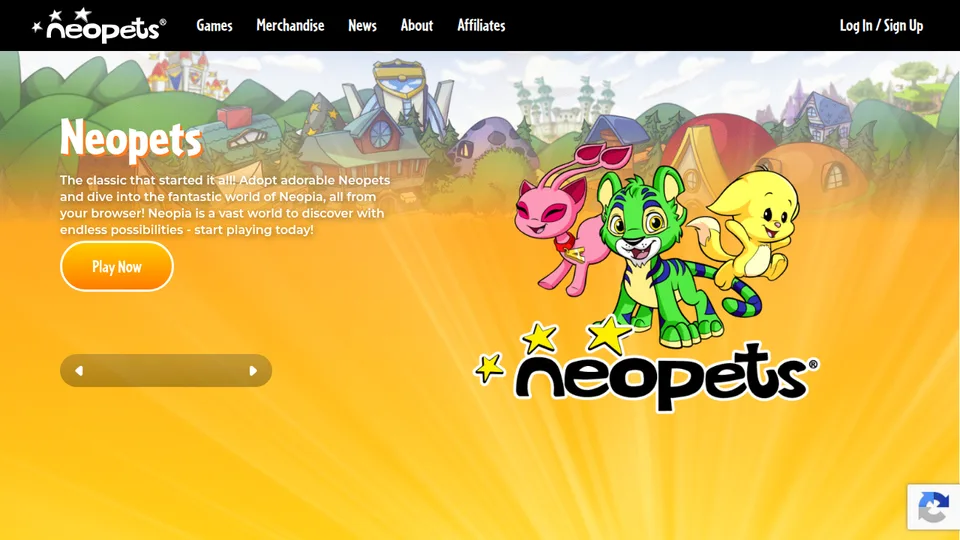
- Neopets launched on 15 November 1999. Co-founder Adam Powell said the goal was to “keep university students entertained, and possibly make some cash from banner advertising”.
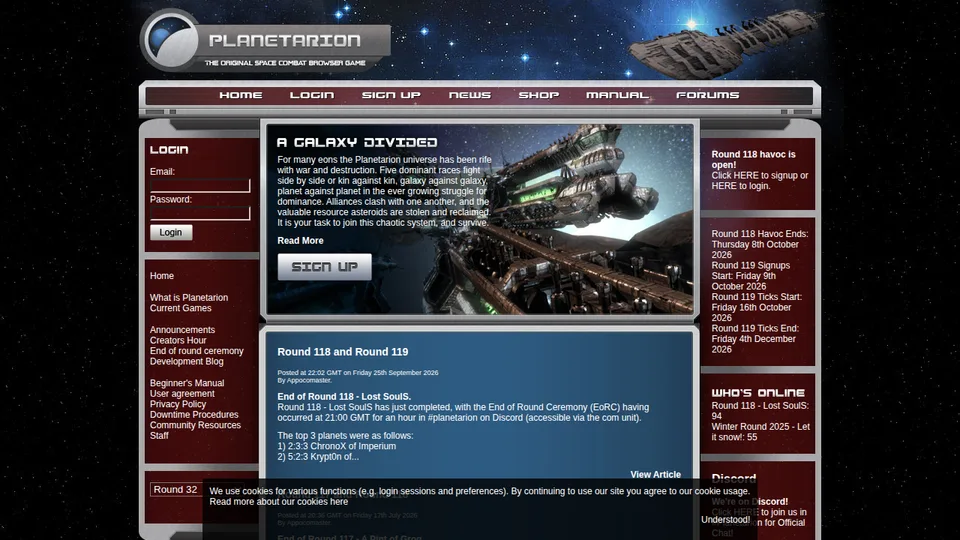
- Planetarion, from Norway’s Fifth Season AS, launched in early 2000 with one tick an hour. It had over 30,000 players when PC Zone reviewed it in October 2000.
- OGame followed in 2002 from Gameforge, and NationStates on 13 November 2002, built by novelist Max Barry to promote a book.
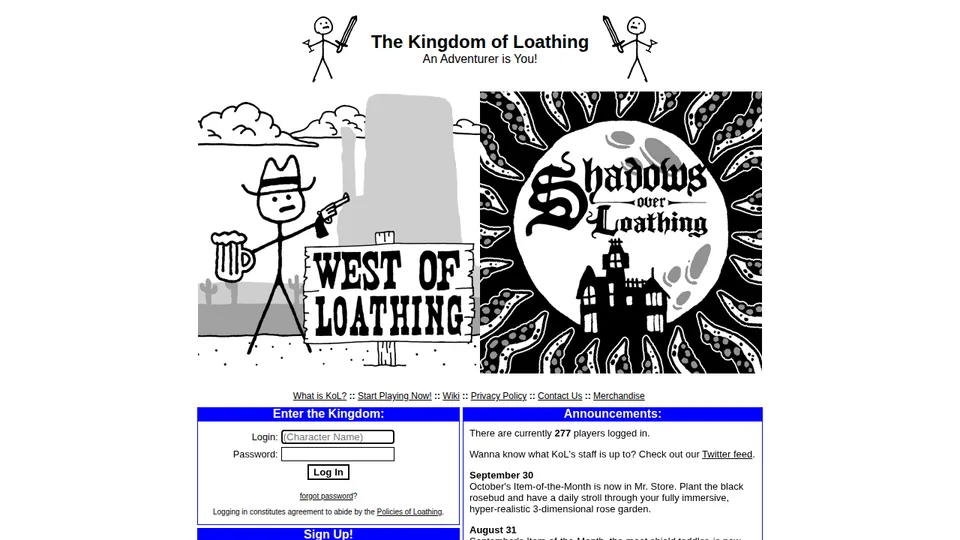
- Kingdom of Loathing came out in early 2003. Zack Johnson had set himself the challenge of making a game in a week. Within a year it had 300,000 accounts.
- Tribal Wars launched in 2003, made by brothers Eike and Hendrik Klindworth and a friend.
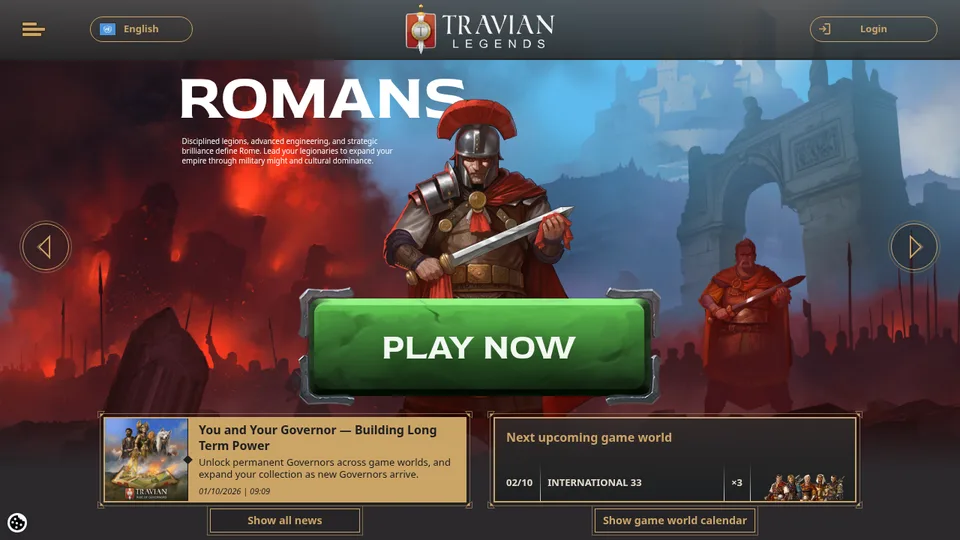
- Travian launched in June 2004 as “a PHP hobby project” by Gerhard Müller, then a chemistry student at the Technical University of Munich (Wikipedia).
- Torn opened as an alpha in August 2004, built by Joe Chedburn.
- Urban Dead, Kevan Davis’s zombie city, went live on 3 July 2005.
The pattern is plain. Most were hobby projects by students or single developers: a server script, a database and HTML forms. Banner adverts paid the early bills. When advertising collapsed with the dotcom crash, Planetarion went pay-to-play from its fifth round, and its user base fell sharply (Wikipedia). Others moved to donations and premium accounts. A few hobbies grew into companies: Travian Games still runs Müller’s game, and InnoGames still runs the Klindworths’ Tribal Wars. The word for all this came last. The PBBG Project coined “persistent browser-based game” in 2007 (pbbg.net). We cover the survivors one by one in the longest-running browser games still online.
Flash and Facebook, 2007 to 2012
Two things changed the scale. Flash brought animation and sound to browser games without a separate download, and Facebook gave them an audience. Facebook opened its platform to outside developers on 24 May 2007; by July 2008 there were 33,000 applications (Wikipedia). Zynga, founded in April 2007, launched FarmVille in June 2009. It reached ten million daily players within six weeks and 83.76 million monthly players in March 2010 (Wikipedia).
These games spread through friends: gifts, invitations and notifications. “Application spam” was a complaint within months of the platform’s launch.
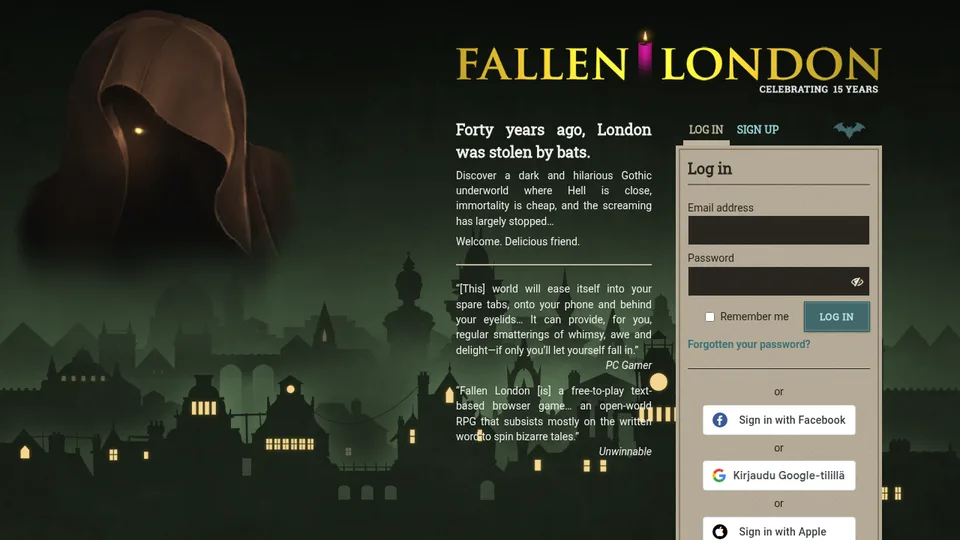
Persistent games joined the rush. MouseHunt launched on 7 March 2008, won a $250,000 grant from Facebook’s fbFund nine months later, and was one of the first Facebook games with a tradeable item you paid for (Wikipedia). Fallen London started in October 2009 as Echo Bazaar, an amateur project by Alexis Kennedy (Wikipedia). Forumwarz (2008), Mob Wars: La Cosa Nostra (2009) and Gameforge’s Flash RPG Tanoth (2008) belong to the same years.
The platform kept moving under them. Facebook stopped accepting new apps in its own markup language in March 2011, and that markup stopped working on 1 June 2012. In December 2012, more people signed in to Facebook from phones than from the web.
Phones, apps and the end of Flash, 2006 to 2020
The move to phones started earlier than most people remember. Travian sold a phone interface as a Java ME app by subscription from 2006. Neopets Mobile ran on T-Mobile from 2006 until 30 June 2009, and when it closed its Lutari Island became unreachable. In late 2012 InnoGames made Tribal Wars’ mobile version free to all players, citing “a higher mobile focus in general” (Wikipedia). By 2012 Adobe had stopped developing Flash for mobile browsers.
Flash itself went next. Adobe announced on 25 July 2017 that it would end support, discontinued the player on 31 December 2020, and from 12 January 2021 the player refused to run Flash content (Wikipedia). Zynga closed the original FarmVille on Facebook on that same 31 December. Tanoth went offline with Flash and returned in HTML5 as an open beta in 2024 (MMOs.com). Neopets converted its most popular Flash features to HTML5, and some parts of the site stopped working when Flash support ended. Apps did not always win either: Fallen London’s iOS and Android versions came out in 2016 and were retired in 2018, while the browser game carried on.
Text games were barely touched. A page of forms and tables needed no plugin, so the games of 1997 to 2005 kept running while the Flash scene faded. Some added apps: about a third of the games we list that launched before 2007 now have official mobile apps. The rest are still played in a phone’s browser.
The 2020s: idle MMOs and solo builders
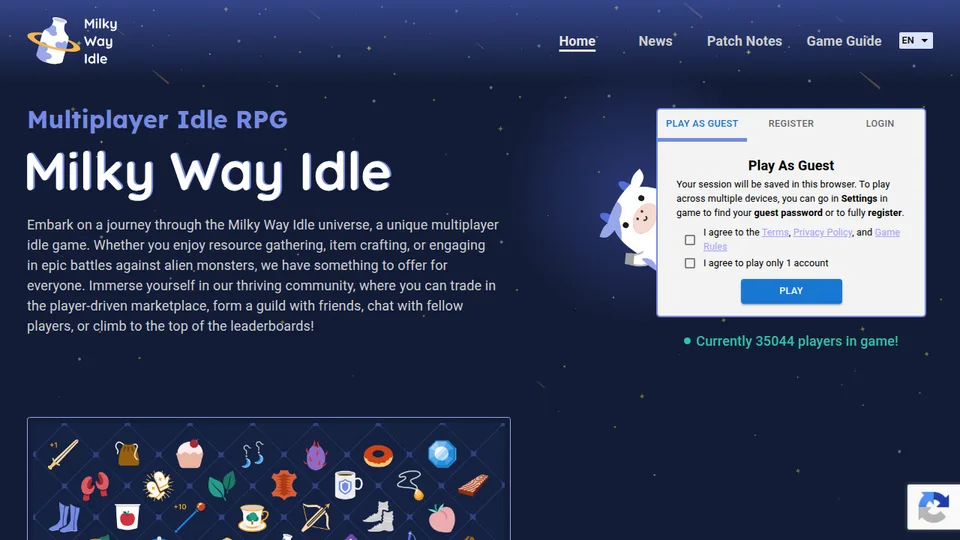
The newest wave is idle. Milky Way Idle launched in 2022, IdleMMO in 2023, Ironwood RPG in 2024, and FlatMMO and Idlemir in 2025. Nearly half of the listings we can date to 2020 or later are idle games, and idle is about one listing in eight overall. Your character trains or fights on a server timer while the tab is closed. Other players matter through the market, guilds and leaderboards. We compare them in the best idle MMOs you can play in a browser.
The idle loop is not new. It is the play-by-mail turn and Planetarion’s hourly tick, turned into the whole game.
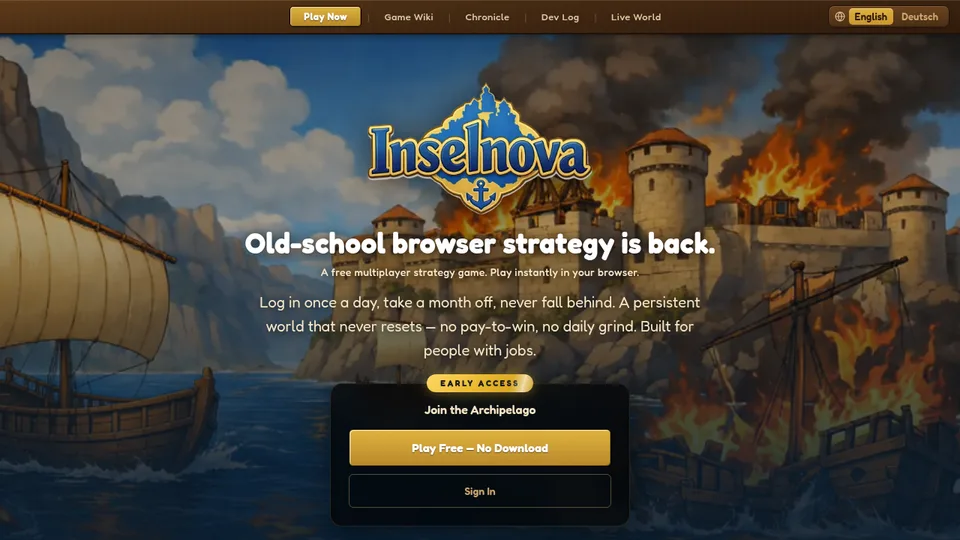
The other change is who builds, and how. Many new listings are one person’s project, as in 1999, and some say openly that they use AI coding tools. Inselnova’s developer, Darren, says on its about page that he writes about “the AI-assisted workflow” on the dev log. MineThings 2’s history page says AI-assisted development made its complete migration of a 2009 game “practical”. Players have also met a flood of thin, low-effort sites, and they say so; we looked at the signals in why new browser games get called AI slop. The history suggests the tool matters less than the basics it has always taken: a loop that works, a developer who answers bug reports, and a plan for the server bill. The year’s arrivals are in new persistent browser games of 2026.
What the eras have in common
Three things repeat across five decades.
The pacing barely changes. A postal turn every two weeks became hourly ticks, daily turn allowances, energy bars and idle timers. Each one rations play so that people with jobs can compete. The glossary explains the terms.
Platforms die and plain web pages outlast them. T-Mobile’s Neopets service, Facebook’s app markup and Flash all ended, and each took games or parts of games with it. Games built on ordinary HTML kept running.
Hobbies become institutions. A student’s PHP project became Travian. A week-long challenge became Kingdom of Loathing. Several games launched before 2000 are still taking new players, and many of the new ones are again being built by one person in their spare time. If you are one of them, submit your game when it is ready for players.