Before a player signs up for a new browser game, they want four answers: what they will do, whether anyone is still working on it, who runs it, and what it will cost. Your public pages should give all four to someone who has not made an account. This checklist comes from reviewing hundreds of game sites for this directory. Each item made a game quick to verify when it was there, and slow or impossible when it was not.
1. Say what the player does in the first lines
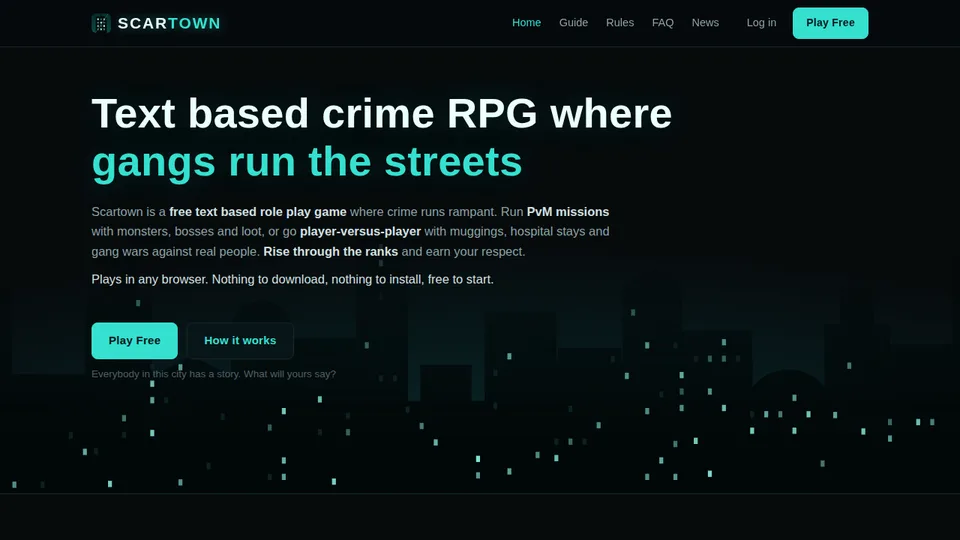
Scartown’s homepage opens with “Text based crime RPG where gangs run the streets”. The next sentence offers missions against monsters and bosses, or muggings, hospital stays and gang wars against real people. Then: plays in any browser, nothing to install, free to start. In three lines you know the genre, both loops, the platform and the price.
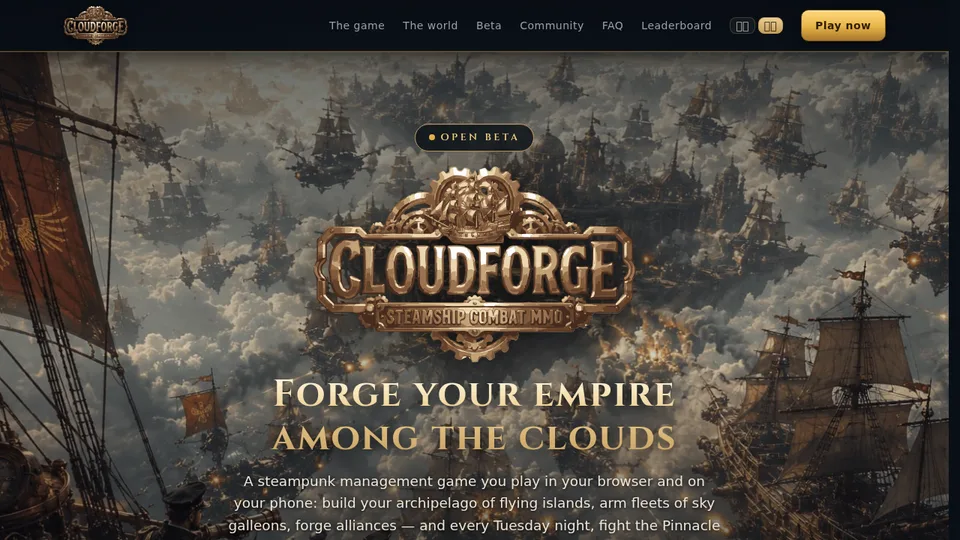
Cloudforge does the same in one paragraph: build an archipelago of flying islands, arm fleets of sky galleons, forge alliances, and fight the guild war “every Tuesday night”.
Test your own opening against a rival’s homepage. If your first sentence could sit there unchanged, it is describing a genre, not your game. We write a one-line pitch for every listing. When the site gives us those first lines, it takes minutes.
2. Show real screenshots, and say that they are real
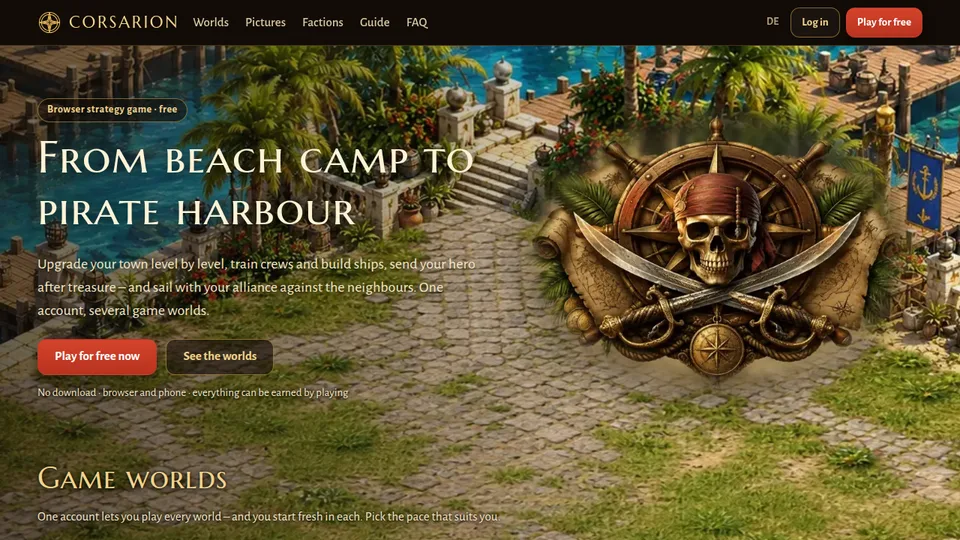
Cloudforge’s homepage labels its gallery “Real screenshots from the beta, captured on the server where captains are playing right now: no concept art”. Corsarion titles its section “What Corsarion looks like”, promises “Real pictures from the game”, and captions each one with what it shows: the town’s building plots, the sea chart, the upgrade screen, the hero.
Concept art and mock-ups are fine if they are labelled. Unlabelled art invites the question of whether the game looks anything like it. Show at least one screen from a phone if the game works on one. We take a screenshot for every listing, and developers can send a replacement at 16:9 through the submit page.
3. Keep a dated changelog or news page
This is the item that decides status. We call a game live only with a dated sign of life from the last six months. We call it dormant when the newest dated sign is over a year old. Anything in between, or a site with no dates at all, stays unverified. About one listing in five in our index has no dated activity on record.
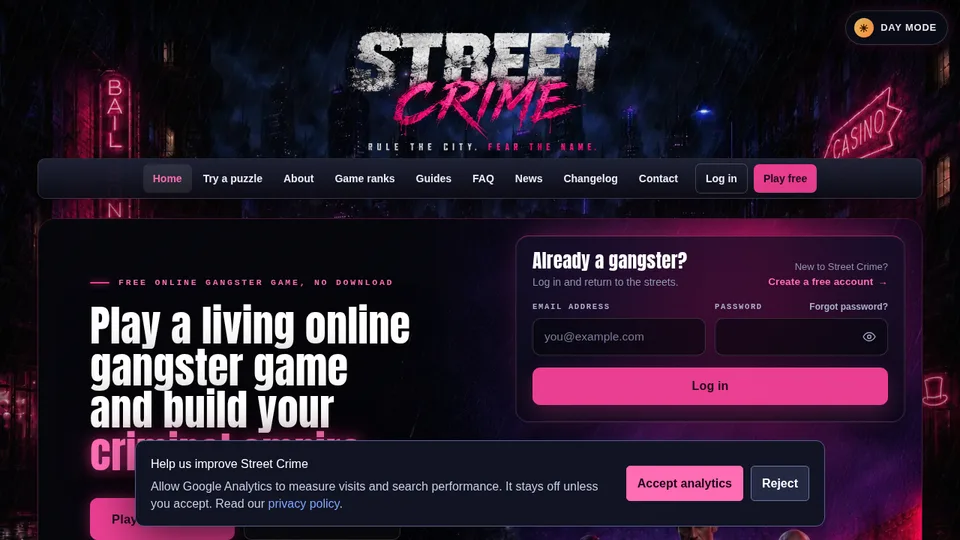
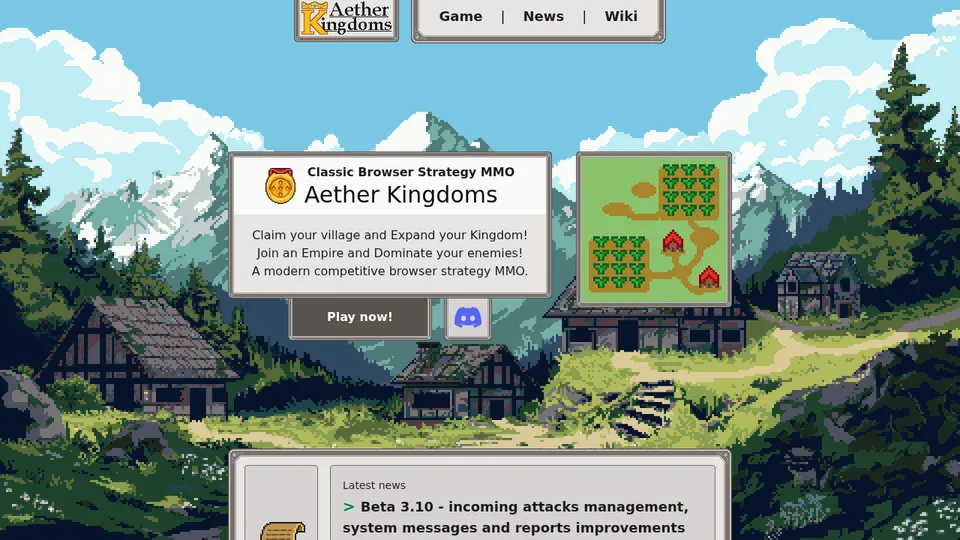
Street Crime’s changelog is the model. Every entry carries a date, a time, a version number and the name of whoever posted it. Aether Kingdoms numbers its patches (Beta 3.1, 3.2 and on) and dates every post; they arrive every week or two.
Three details matter. Put the date in the text, not only inside an image or a script. Write the year: a “12 September” with no year leaves the reader guessing. A version number alone is not a date.
4. Put the rules where a logged-out player can read them
A player compares rules before committing months to a game. We use the same pages to fill in the fact table: how resets work, what a session looks like, whether there is an energy timer.
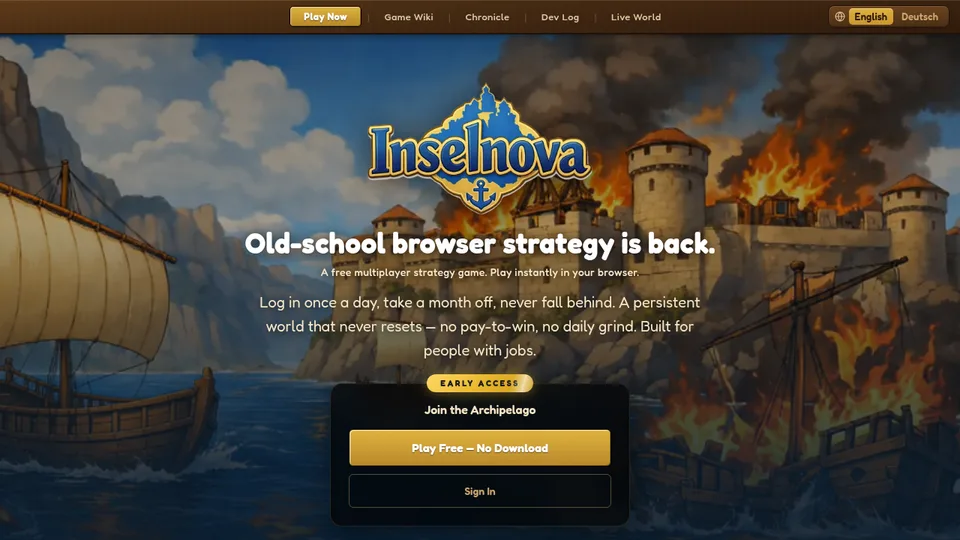
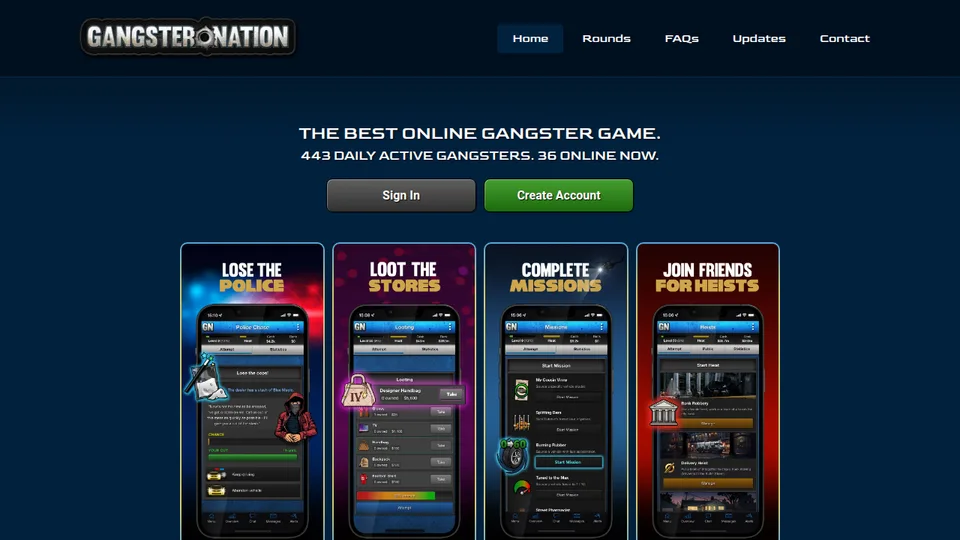
Inselnova keeps a public handbook that covers each system, plus a “First Orders” guide that walks through a new player’s first 24 hours. Gangster Nation’s guide states that there are 50 main levels and unlimited Prestige levels beyond them. It explains that cash can be stolen while money in the bank is generally safe. Those are facts a player can plan around.
When this is missing, we end up reading a game’s own code. Roughly one listing in eight took facts from script bundles, interface strings or meta tags because the visible pages said too little. Among games still in alpha or beta it was nearly one in four.
5. Say who runs it
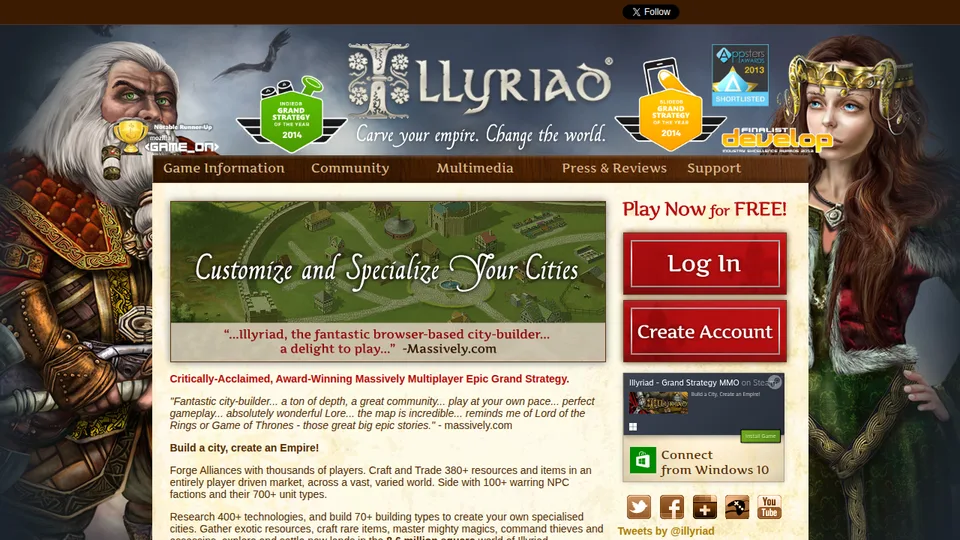
Illyriad’s about page gives its company name, a London address and a Companies House number. It also lists its release dates: alpha on 22 February 2010, beta on 31 March 2011, launch on 16 May 2011. Aether Kingdoms has a team page that names its game designer and credits its programmer and pixel artist. Corsarion’s imprint names its operator, and credits the open-source engine it is built on and the free games its graphics come from.
You do not need a company. A name, a handle with a history, or one line saying a single person builds the game in their spare time is enough. Nothing at all is not. About half our listings say “Not stated” for the developer. Among games running ten years or more, about seven in ten name someone. Among games still in alpha or beta, about four in ten do.
6. Say how it makes money
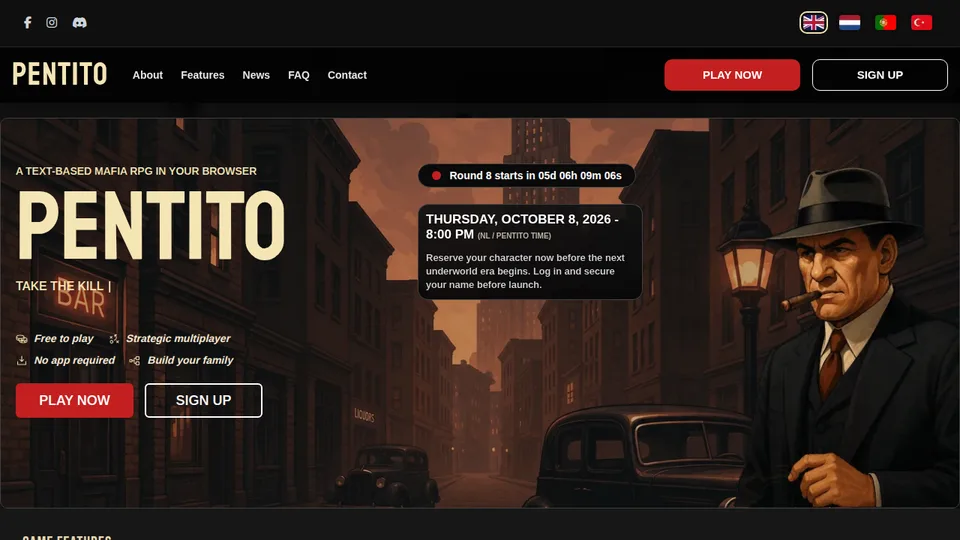
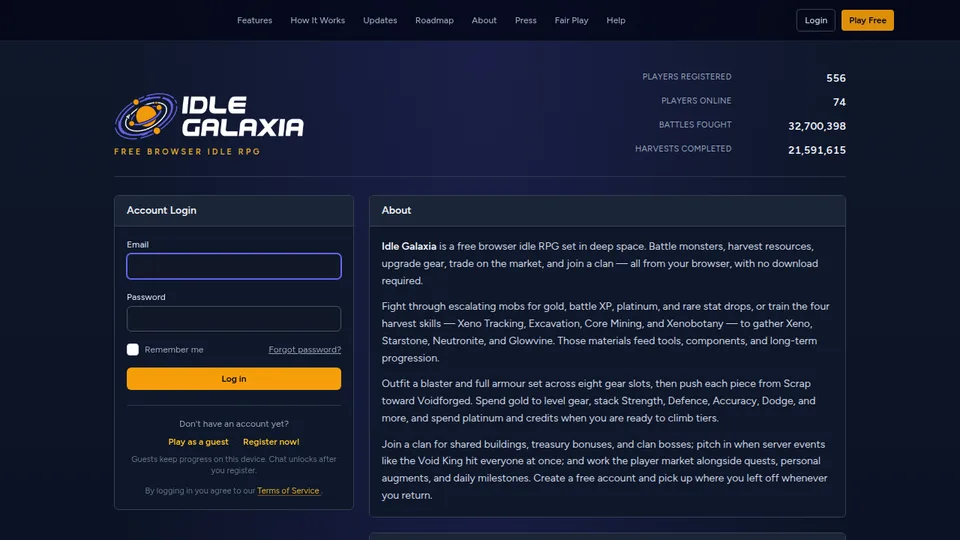
Pentito’s “No Pay To Win” page lists its coin prices, starting at €1 for 10 coins. It says Premium costs 50 coins for 30 days. About its automation feature, it says: “That is a real convenience advantage, and we do not pretend otherwise.” Idle Galaxia’s fair-play page lists every credit pack from $5 to $100 and VIP at $5 or $10 a month. It states that “Purchases can affect how quickly you advance relative to free play.”
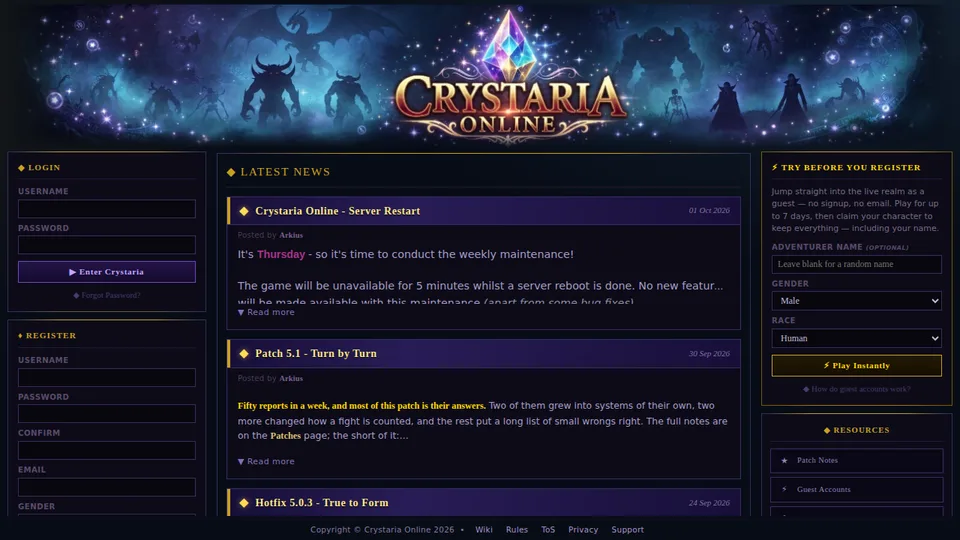
Free games can do this too. Crystaria Online’s donate page says the game is made by one person in their spare time. It explains that every £5 donated in a calendar month raises an experience bonus for every player by 1%, up to 15%, and that a donation “buys you no personal advantage of any kind”.
A plain account of pay-for-speed is more convincing than a vague “no pay-to-win” badge. For about one game in six we list, we could not tell how it makes money at all.
7. Link a community space
About seven in ten of our listings link at least one community space, and about half link a Discord. Cloudforge’s homepage says what its Discord is for: announcements, bug reports, balancing, and channels where guilds organise. Inselnova links its Discord, subreddit and Facebook page from its site footer.
Small is fine; describe it at its real size. Then check the invite still works. More than once, the Discord invite on a game’s own site has led nowhere when we tried it.
8. Write terms without template text
One game we reviewed had terms naming its operator as “REPLACE ME”, followed by a prompt for “your full legal name”. Its payment processor was given as “Paddle or Lemon Squeezy”. Those are the instructions from a template, still in place on a site that sells subscriptions.
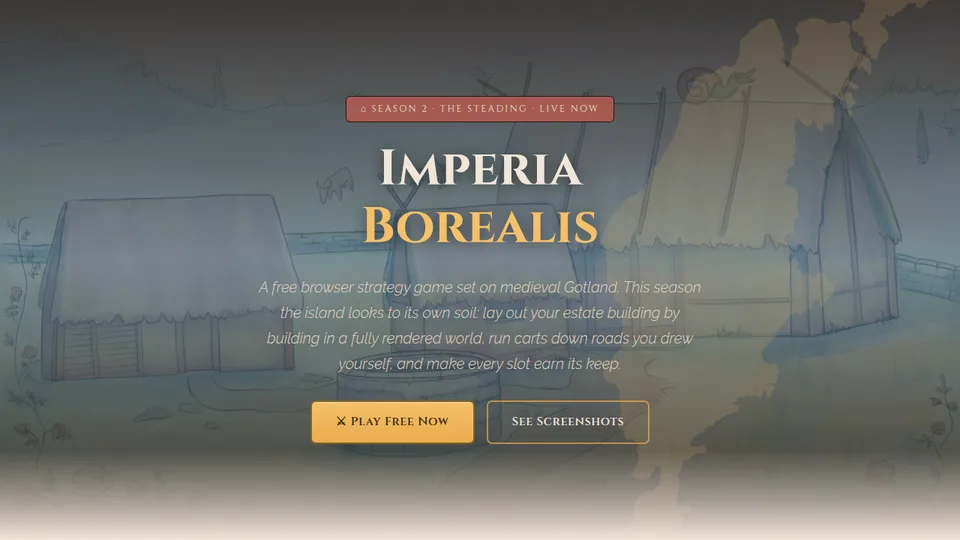
Imperia Borealis shows the alternative. Its terms name the operator, Visby Wild Crew AB, and deal with the risk of a soft launch head on. If a wipe removes Silver bought with real money, “we will restore that Silver or, where restoration is not practical, refund the affected recent purchase.” Cloudforge’s terms say plainly that progress may be wiped while the game is in testing.
If your terms are not ready, say so. One alpha we list states on its terms page that the legal operator, the jurisdiction and the age policy “have not been published yet”. That is honest. A template that only looks finished is not.
9. Let people try it before they sign up
Cloudforge lets you start as a guest and save your progress later with an email code or a Google account. Inselnova’s “Play Now” buttons go straight to a guest start. Street Crime offers a practice safe-cracking puzzle with no account at all. It uses the same rules as the puzzles in its missions, and says plainly that it awards no character progress.
If guest accounts have limits, such as no market or no guild, say so on the start screen rather than letting a player find out an hour in.
What we can see, and what we cannot
We read public pages only. We do not create accounts, fill in forms or solve captchas. Anything behind a login stays “Unknown” or “Not stated” in a listing, however good it is. A news page inside the game does not count towards status if nobody outside can read it.
When your public pages cover these nine points, submit the game. A person reads every submission and replies within seven days: listed, needs something, or not a fit, with the reason. The full criteria are on our about page.