Small browser games that last twenty years do fewer things, more steadily, than the games that came and went around them. The ones in our index share six habits: a core loop that has barely changed, a rhythm players can plan around, players who help run the place, hosting a hobbyist can afford with backups that work, money that does not split the community, and a plan for who carries on. The evidence below comes from the games’ own about, history and rules pages, and from our index.
How many small games last that long
Nearly a third of the games we list carry our long-running tag, meaning they have been live for ten years or more. Of the games whose launch year we could confirm, about two in five launched in 2006 or earlier. Nearly a third of those are indie by our definition: one person or a very small team.
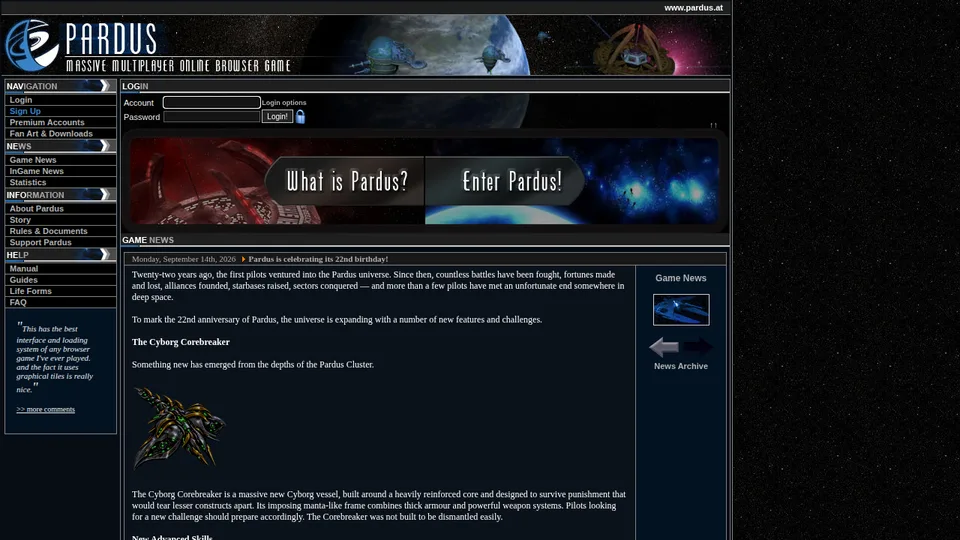
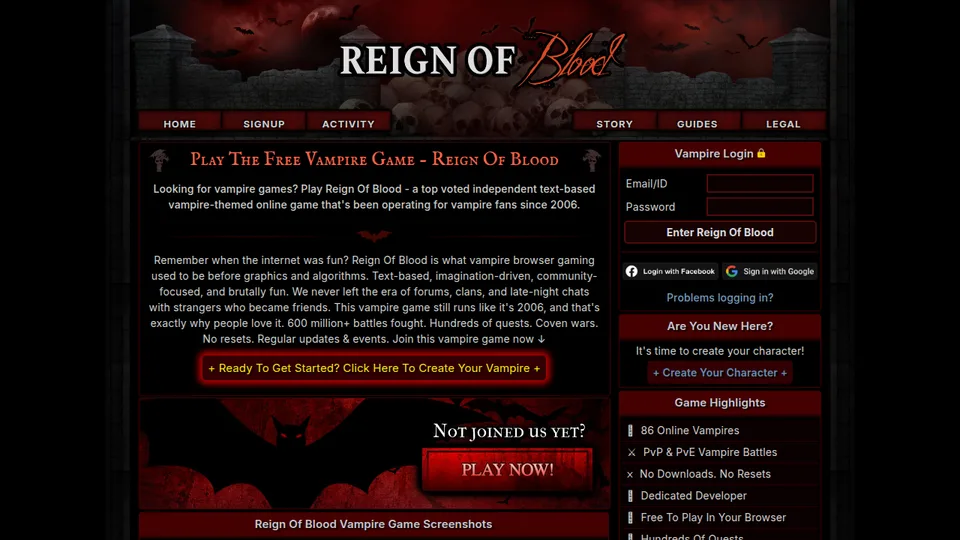
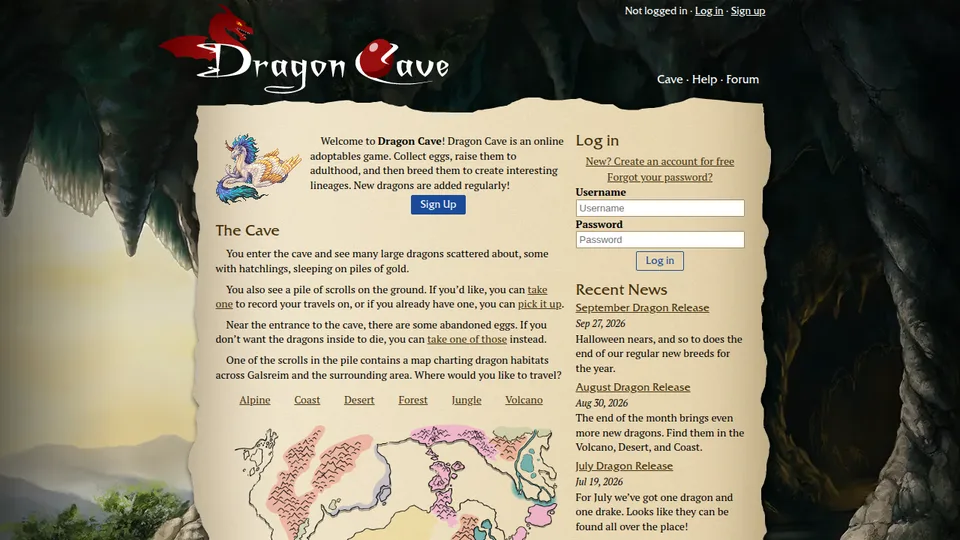
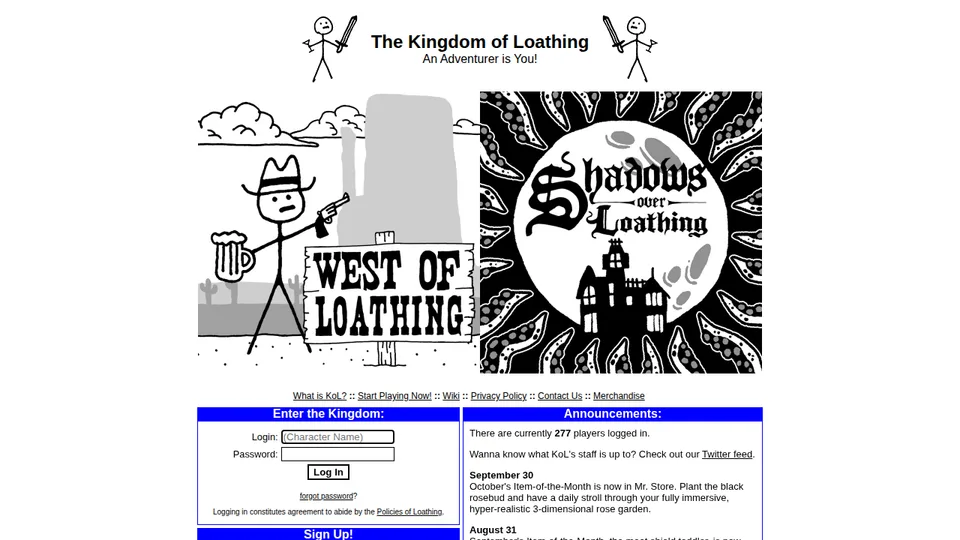
That group includes Reign of Blood (2006, DarkAsh), Dragon Cave (2006, T.J. Lipscomb), Kingdom of Loathing (2003, Asymmetric), NationStates (2002, Max Barry) and Bushtarion (2001). Pardus is not tagged indie, but its history page says it began in the summer of 2003 and that its “two active developers” founded the company that runs it in 2006.
A core loop that barely changes
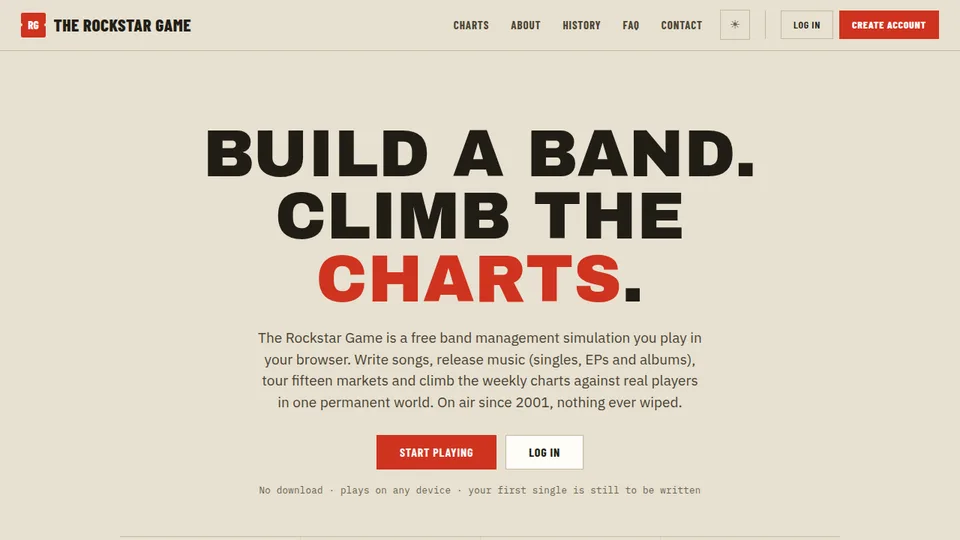
The Rockstar Game is the extreme case. Its history page calls 2005 to 2026 “the janitor years”: “No new features, just a world that kept ticking”. The same menu, Write Songs, Go on Tour, Chart Watch, “would navigate today’s game almost unchanged”. The page says Internet Archive captures show a hundred-odd players online right to the end of that stretch, in a game that did not grow.
Reign of Blood opened on 27 April 2006 and has never reset. Its creator writes on the about page that he has worked on it “for 20+ years, with updates being made at least weekly”. The updates add quests and events around a fixed loop of feeding, searching and fighting. They do not replace it.
Pardus has described its action points the same way since at least 2010, when its about page was last modified: a system “allowing players with limited time online to be just as competitive as players that have unlimited time online”. That sentence is a design promise. A twenty-year game keeps it.
The lesson for builders: add content around the loop and leave the loop alone. People who have played the same daily routine for a decade are your base. A redesign asks every one of them to start again.
A rhythm players can plan around
Dragon Cave adds new dragon breeds roughly once a month. Its homepage news lists releases on 28 June, 19 July, 30 August and 27 September 2026, the first of them just after the site’s 20th birthday. Players know when to look.
Kingdom of Loathing has put a new Item-of-the-Month in Mr. Store every month since late 2004, by the KoL wiki’s table of monthly offerings. The wiki also records the few times it slipped, such as a two-day delay in June 2014. A slip worth writing down tells you how rare slips are.
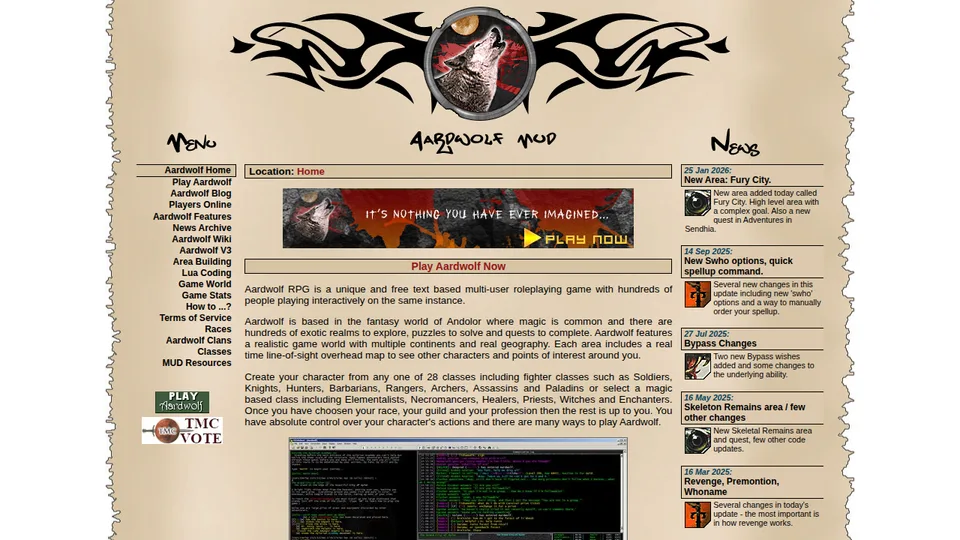
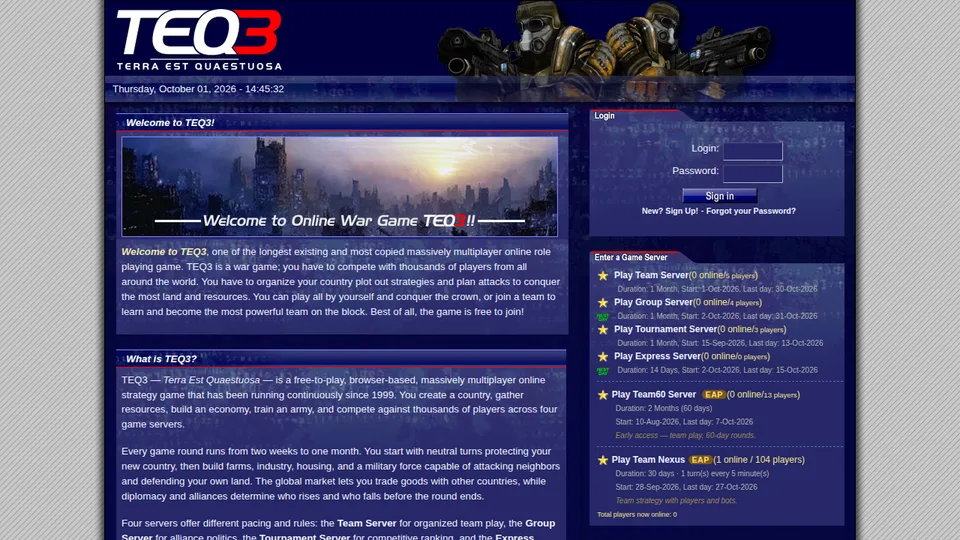
Aardwolf, online since 1996, says on its about page that it “reboots every week or two with new additions”. Miniconomy, live since 2002, runs a three-week trading period per round. Terra Est Quaestuosa’s FAQ says each round “ends on a fixed date with final rankings published”.
A small update on a known schedule does more than a large one nobody can predict. If your game runs in rounds, publish the next start dates.
Players who help run the place
Few solo developers can moderate a game alone for twenty years. The long-runners hand defined jobs to trusted players.
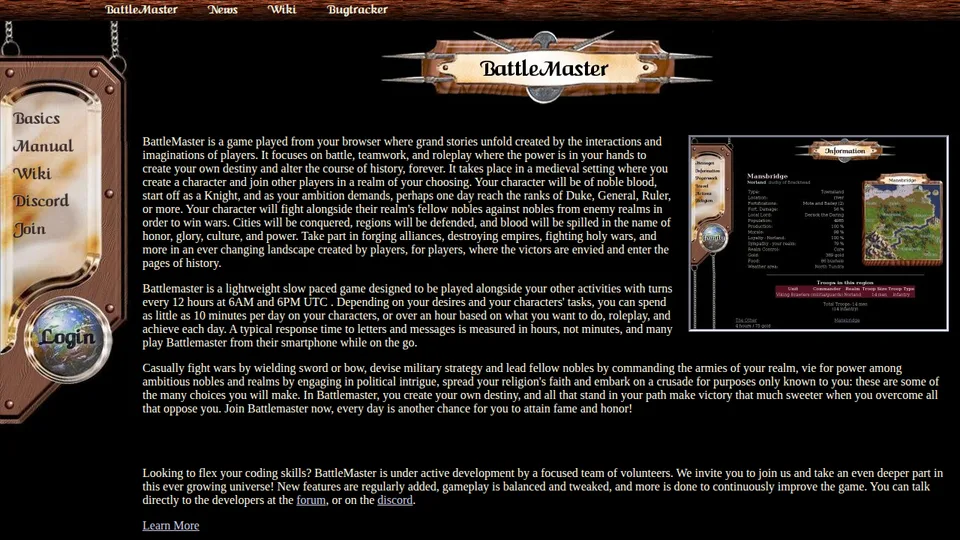
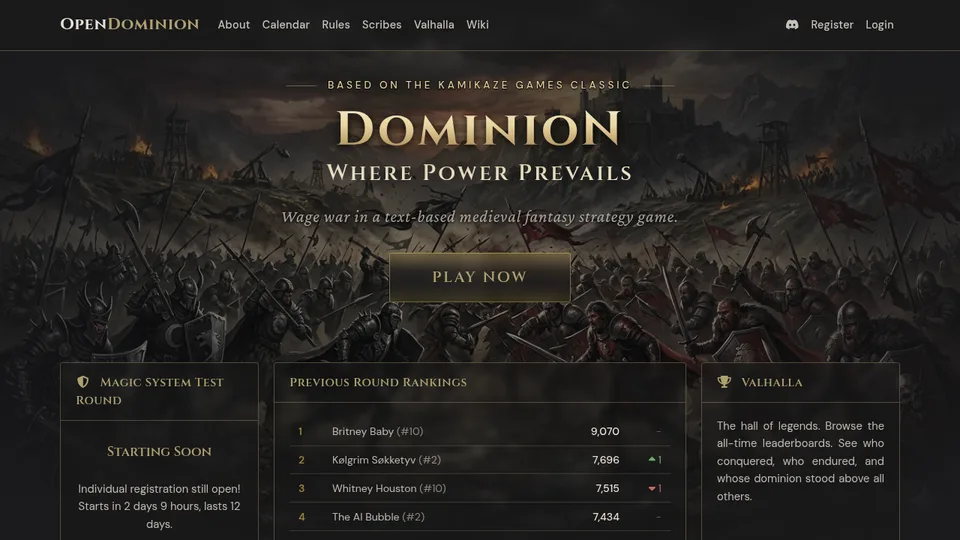
BattleMaster’s about page says “players and GameMasters cooperate on removing” cheaters and abusers, and credits sixteen people with additional coding. Aardwolf has volunteer “helpers” on its newbie channel. OpenDominion gives game balance to a Gameplay Committee of “player volunteers”, whose changes are implemented “at the administrators’ discretion”; any player can propose a change, with reasoning. Star Wars Combine has been run by a volunteer team since 1998.
Clear rules make that work possible. Terra Est Quaestuosa allows one account in total, bans scripts that take in-game actions, and says spreadsheets are fine. Shartak’s FAQ explains why “zerging” is frowned upon and says intentional cheating can mean expulsion. Write the rules before you need them, and say what is allowed as well as what is not.
Modest servers and real backups
A text game runs on very little, but cheap hosting has failure modes. The Rockstar Game’s hosting started at £50 a month in 2001 and multiplied sixteen times within two years; the game stopped in mid-2003. Reign of Blood’s predecessor was hosted by three students at its creator’s college who were starting a hosting company. When it had server trouble, the vampire version went up somewhere else, and the players followed.
Then there is data. On 26 June 2026 The Rockstar Game’s developer opened its old MySQL server for remote work “and didn’t lock it down to my own address”. Within an hour or two every database had been deleted. “There were no backups.” The game was rebuilt and relaunched in July 2026 with a new world; the old one survives only in Internet Archive captures.
The lesson costs almost nothing to follow. Keep the database off the public internet. Take backups somewhere else, on a schedule, and restore one now and then to prove it works.
Money that does not split the community
Pardus has sold premium accounts since 14 September 2006, and its history page says they “make up the majority” of the company’s revenue. The premium page is careful about what it sells: 500 more storable action points, but “AP regeneration rate will not increase”. Aardwolf is “financed by donations from players of the game and by the owner”. Shartak’s FAQ says its adverts help “recover costs for the server and bandwidth”, alongside donations.
The Rockstar Game shows the other side. In 2003 it went pay-to-play at £1.50 a month, when, in its words, “Most of the players were kids without bank cards.” It was not enough. A model that shuts out most of your players ends the game faster than a thin one.
Open source it, or hand it over
Every developer’s time on a game runs out eventually. The games that last have a next person ready.
BattleMaster was “originally designed and created by Tom Vogt” and is “currently owned and maintained by Timothy Collett”. Terra Est Quaestuosa’s About page credits four people at Schoot Digital Productions from 1999 to 2025. In 2025 PGMS Inc. took over: a small Canadian studio founded by Philippe Grandmont, a lifelong player of the game, who is moving it to new hosting and a new interface.
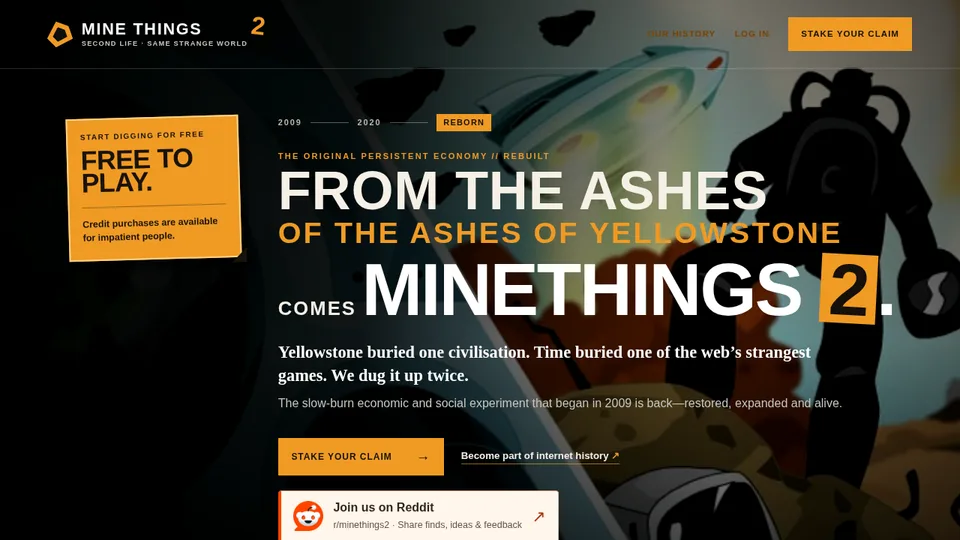
Handovers fail too. The history page of MineThings 2 says the original MineThings owner offered to hand over the keys in November 2019 to anyone who would take on the server bill. A player-programmer, who now identifies himself as Serif, looked at taking over its ageing CakePHP 1.2, PHP, MySQL, Python and CentOS service, and the scale of the job defeated the attempt. The game closed in March 2020, when “the monthly infrastructure bill was difficult to justify”. The code and database snapshots survived. Serif later rebuilt it in Node.js and SQLite, using AI-assisted development for the migration, and reopened it in August 2026.
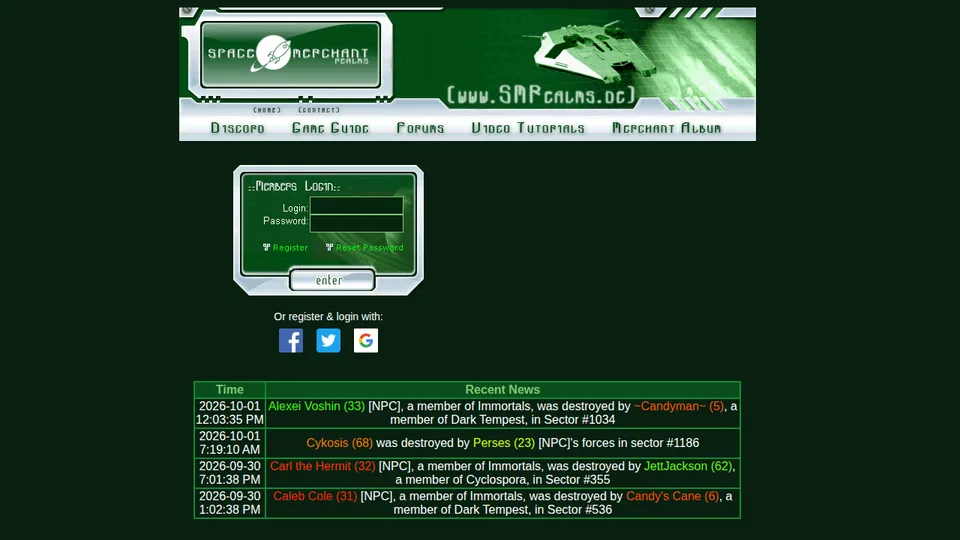
Open source removes the single point of failure. OpenDominion is a free remake of Dominion, a game from Kamikaze Games that ran from 2000 to 2012. Its vision statement opens “Always free, always open source”, and its code is on GitHub under the AGPL, in a repository started in January 2015. Space Merchant Realms keeps its engine on GitHub under the AGPL, in a repository started in 2012, with a README that takes a stranger from a clone to a running server with Docker.
If you cannot open the code, make it something another person could run: a written setup, dependencies that are not a decade out of date, and a database dump they could restore.
How to end a game well
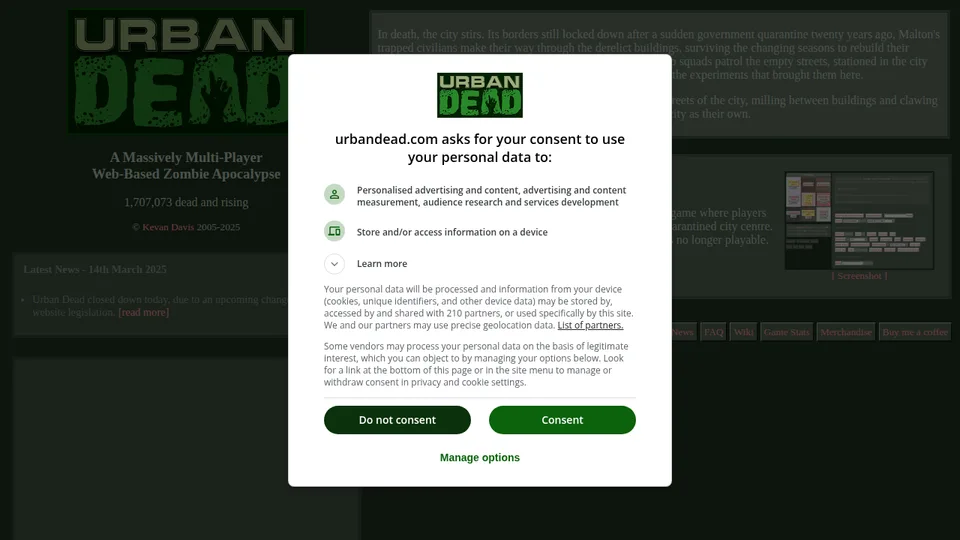
Urban Dead ran from July 2005 to March 2025, made by Kevan Davis. On 3 March 2025 he announced that it would close on 14 March, because of the UK’s Online Safety Act and “the possibility of heavy corporate-sized fines even for solo web projects like this one”. He gave eleven days’ notice. The notice promised “No grand finale” and a switch-off at noon UTC. The notice said the wiki would go read-only the same day, and offered refunds on request for IP unlock donations made in the previous six months. The homepage still stands as a record of the game, and the notice promised that any revival would be announced on the site.
Its interface lives on elsewhere. Shartak’s FAQ says it borrows Urban Dead’s layout and that Kevan “has encouraged its development and has played it”.
An ending is part of the game’s history. Give notice, refund what is fair, freeze the wiki rather than delete it, and keep the domain. If you have a successor or a licence in mind, say so before the switch-off, not after.
If you run a small game with a few years behind it, submit it and tell us when it started.